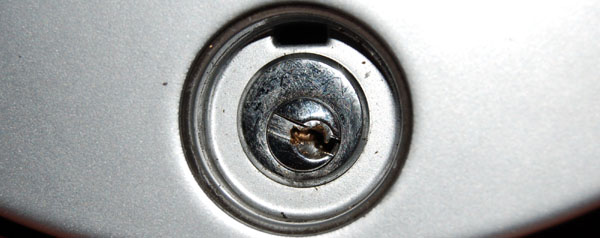
Book reveals new impressioning techniques

January 11th, 2007

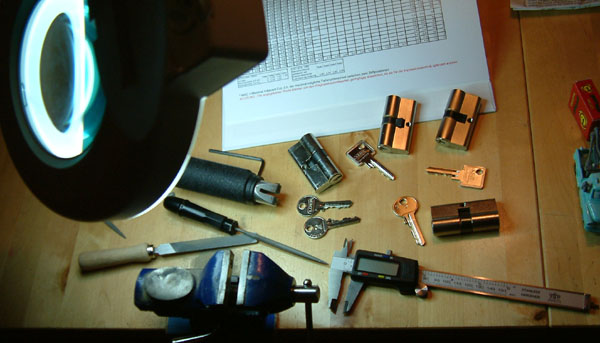
Oliver Diederichsen outdone himself on his book ‘Impressionstechnik’ (English: impressioning).

details details details

It sounds like magic: the expert wiggles a blank key into a lock,
takes it out and examines it, files a bit off the key, wiggles it
again in the lock and repeats these steps till the key turns and opens
the lock. For real experts times under ten minutes are common.

Oliver Diederichsen’s books explains how this is achieved. And if
anyone knows about this way to open locks (called impressioning) it is Oli.
After all he is the German impressioning champion of 2005. In under
7 minutes
he created a perfect fitting key from scratch to open an
Abus 5 pin lock.

But besides being an impressioning master, Oli also has another skill.
He is a great teacher, especially when it comes to lock opening techniques.

To me it seems the only reason he did not become German impression
champion 2006 was because he gave a small workshop together with Dr.
Manfred Boelker one day before the event. Some Ssdev and Toool members
were introduced to the fine art of impressioning with the material
(images) that led to this book. Amongst the interested crowd was Ssdev
member Peter Danilov.

Peter just learned about impressioning that day … one day before the
championships. The next day he entered the championship ‘for the fun
of it’ and won in a devastating time of 5:35! Oli became second in
little over ten minutes. Beaten by his own success …

To me this proves Oli knows how to teach, and for all of us it is
a big motivation to see people can become champions with the correct
instructions and training. And of course a little luck …

Oli’s book gives you these instructions and reveals there is no magic
involved in impressioning. It will teach you what materials to select
and how to use them, the pitfalls you can (and will) run into and the
“do and do-not’s” of impressioning.

What I really like about the book is that it covers new ground. Many
people in the security field know more or less pin tumbler and lever
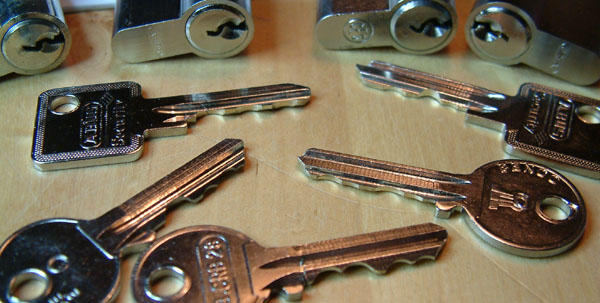
locks can be opened this way. But did you know dimple locks and even
laser track car locks can be opened like this? Step by step Oli covers all
of these locks in detail, and many, many more.

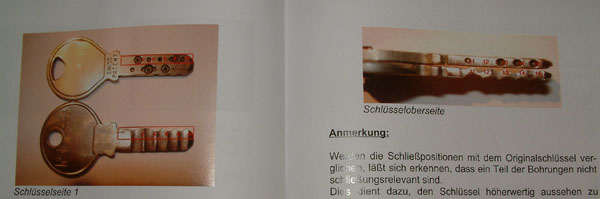
impressioning a 15 pin dimple lock

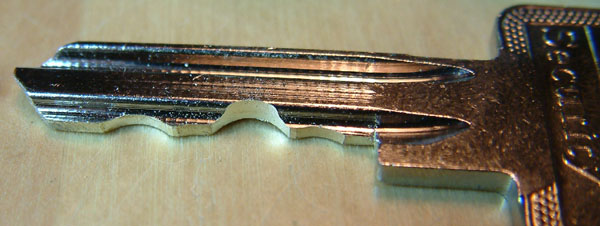
The book is filled with the most clear and beautiful high resolution
images on this subject I have ever seen. I counted close to two
hundred of them, not including schematics or drawings. And that is
what this book is all about, details that make the difference. This
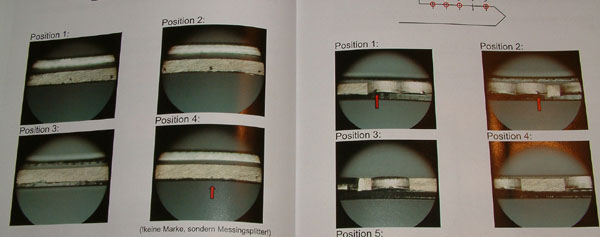
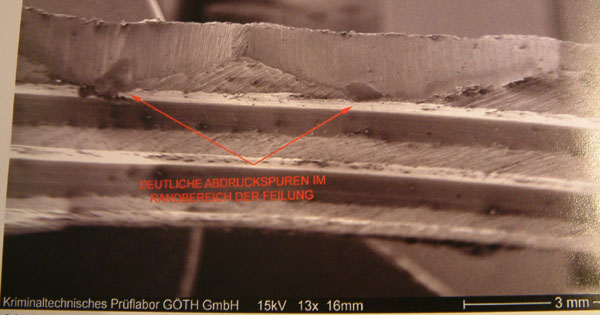
also counts for the chapter Manfred Goth wrote about forensic traces
left by impressioning. The electron microscope images reveal what the
naked eye can not see. Fascinating material!

electron microscopes are cool

Oli explained me that printing in black and white would have made this
book much cheaper. But being the perfectionist he is, he had the
book printed in full color. That is why the price of 79 euro might
seem a little steep. But if you want to learn about this technique it
is worth every penny. And who knows, you might even become the 2007
champion …

It got me motivated to learn more, I think I will give it a try this weekend.

To be continued …. (and no, I do not get commission from Oli, it is just a cool book)

“How it’s made” on hotel locks

January 6th, 2007

hotel lock

Yesterday on Discovery there was an item about how hotel locks were
made. The name of the program is very appropriate: “How it’s made”…

And for the Dutch readers: it even was subtitled in Dutch.

It is always very informative to see how locks are made and tested.
Electronic or mechanic, you always learn a lot. I could tell you what
I learned from it, but advise my dear readers to look at the video themselves.

It can be found here (WMV, 5 minutes, 38 Mb, some weird glitches …sorry)

In the comments we can discuss the possible flaws…

Voting computers in the rebound

January 4th, 2007

The SDU-Newvote computers that were taken out of the Dutch 2006
election are back. If all goes well (for them) the license to operate
on the local March 2007 elections will be given out again.

This is bad news for transparent democracy. The SDU newvote way of
organizing an election is horrible. One day before the elections the
computers are rolled into the polling station. At the end of the day
the numbers are sent to the SDU headquarter via ‘wireless modems’ and
added up there. The people who vote only press a button and have to
hope for the best. Before you know it the computers are taken back by
SDU again and are no longer available for inspection.

In other words: our elections are going to be done on leased Windows
XP machines with a build in wireless modem. This is not something I
can live with…

So the quest for information is on again. I am not sure if they by now
were clever enough to add real locks to these voting computers, but
until that is clear we are looking for information on the following
locks (click here to read the original information request including
high resolution images)

newvote locks

One of the three keys is already identified by one of our readers.
The key to open the back of the SDU-newvote is the same as what is
used in the the computer server industry (the EMKA ‘EK 333’ key).

Who can identify the remaining two locks? The apple-pie reward is still on!

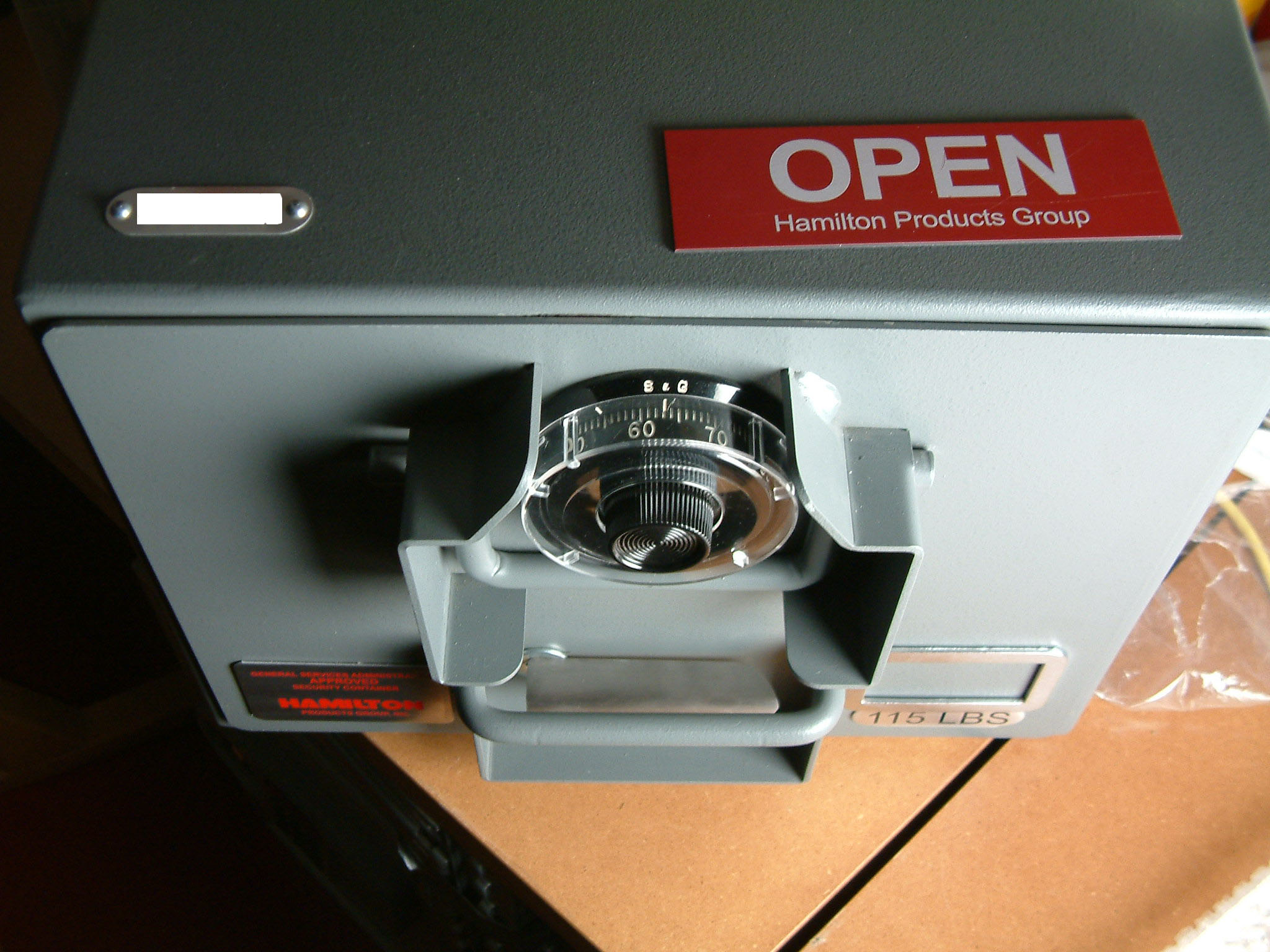
Guess what I got for Christmas? A Safe!

December 30th, 2006

And a very nice one too. Well, it is not actually a safe, it’s a secure
storage container. The US military uses them to store sensitive
documents and goods inside their facilities. The main objective of
this container is to make surreptitious entry as difficult as
possible. Therefore it is equipped with a sargent & greenleaf 8550
‘manipulation proof’ lock. The lock is protected from all four sides
by special ‘hardplate’ metal to prevent people drilling the lock.

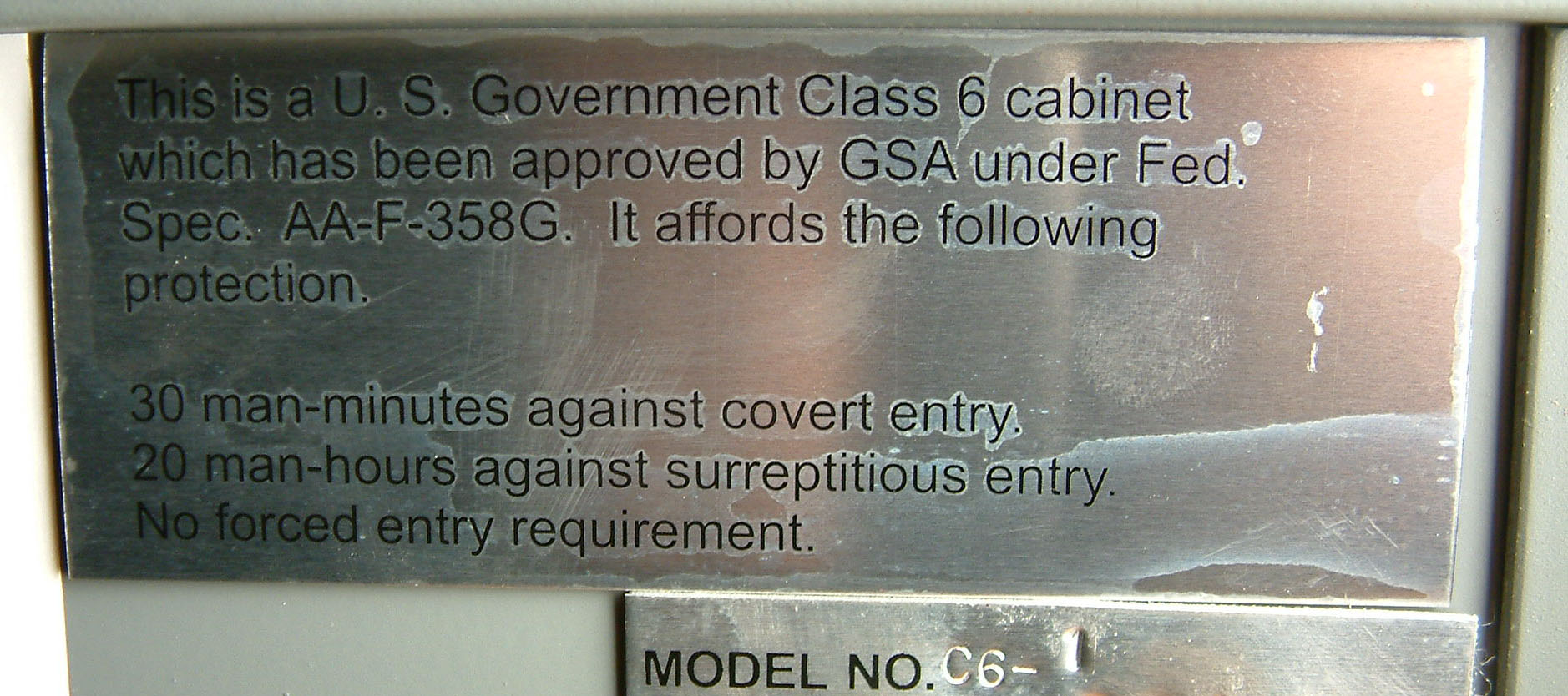
A nice metal plate on the side of the drawer gives all the details of
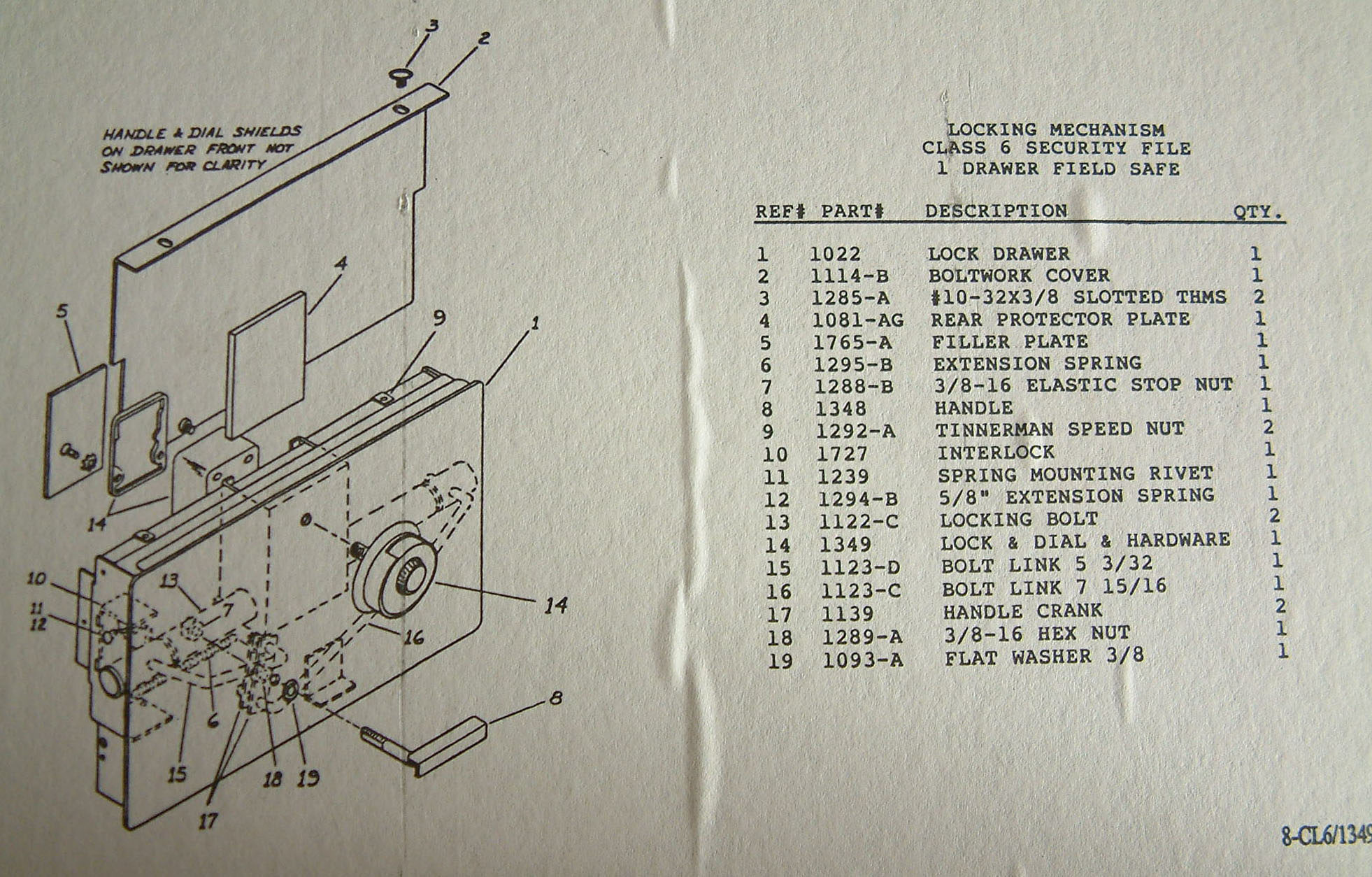
what else this container is secure against. And there is nice sheet of paper with
schematics and part numbers on the inside of the locking mechanism.

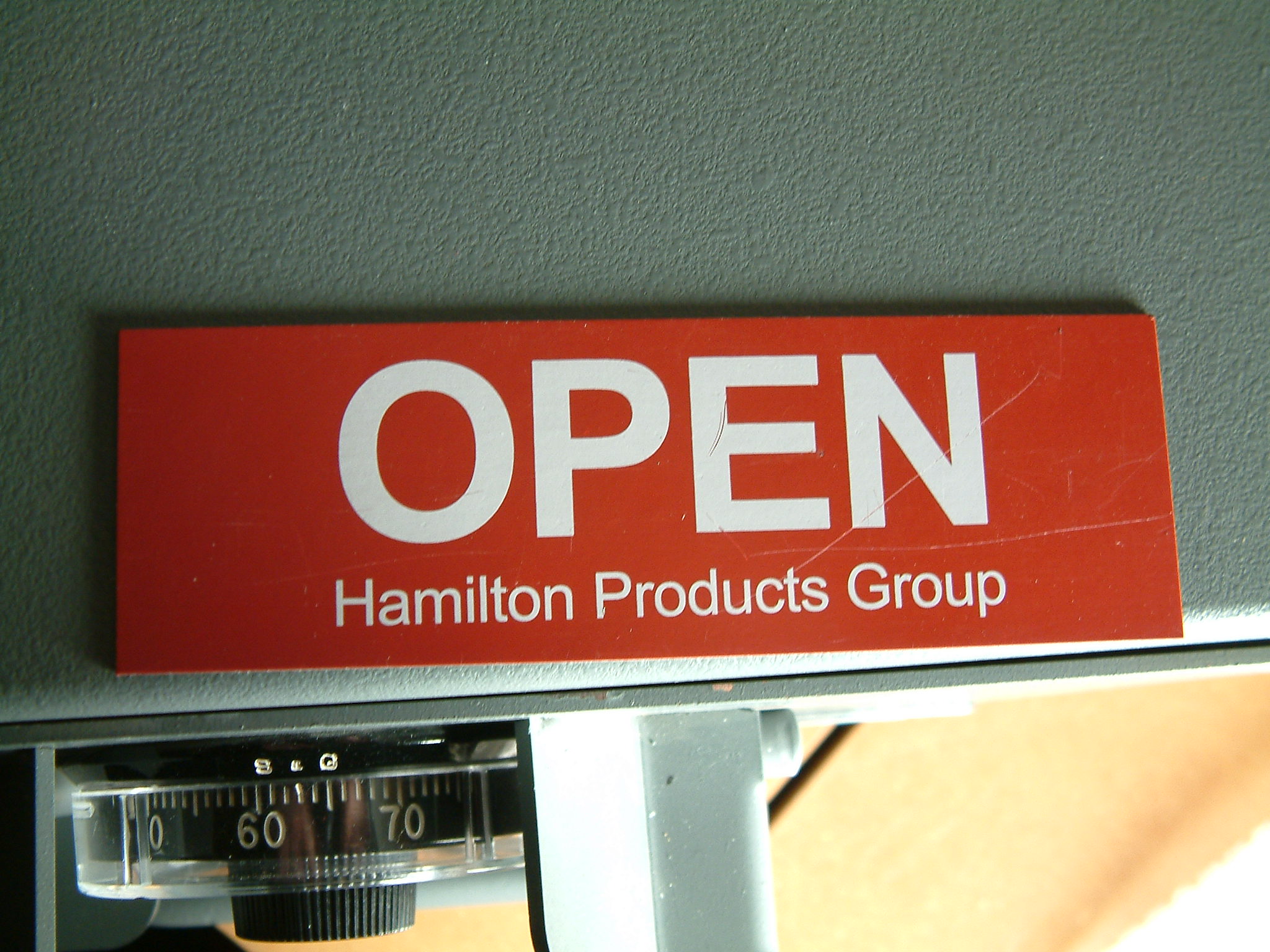
The safe comes with a magnetic sticker that on one side says ‘OPEN’
and on the other side ‘CLOSED’. This is so the operator of the safe
can see in one view if a safe is closed or open (duh).

I tried googling around for this model for 15 minutes or so an could
not find it online.

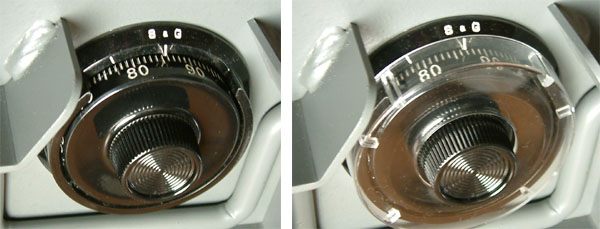
There are some things that are not clear yet. For example, the
container comes with a transparent plastic cover to put over the dial.
Is this to protect the dial against dust? Or is there another purpose?

dial cover

And on the front of the container the weight is noted in big letters.
Is this because it is used in an environment where balance is
important? Like an airplane or submarine? Again, we don’t know.

But I thank good old Santa for his nice present!

Feedback of readers is of course very welcome …

Competition locks from Spain and Israel

December 22nd, 2006

Shahar from Israel mailed me and asked if we were interested in Israeli
locks for the competition. A silly question: Of course we are!

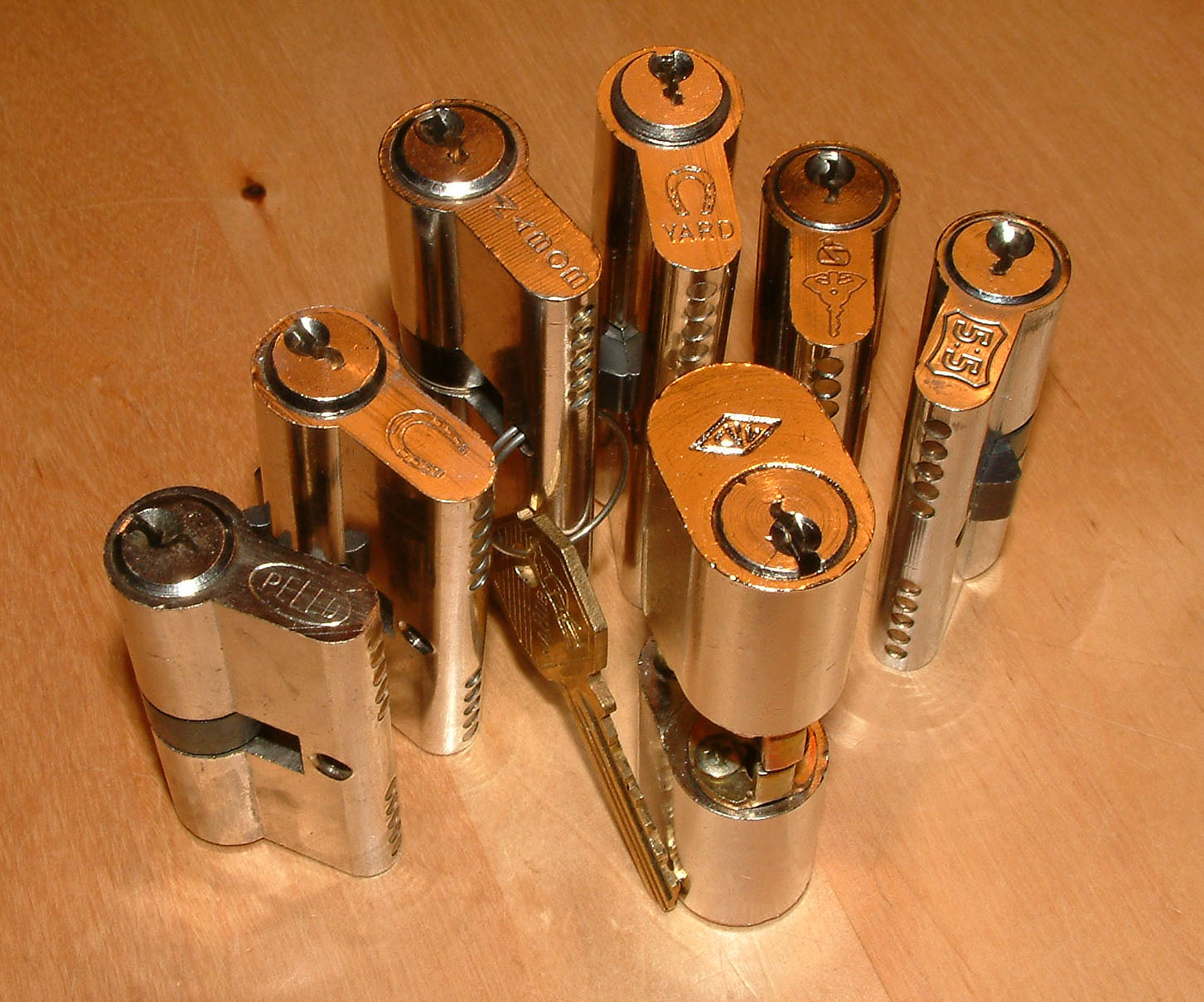
competition locks 2007

He was very kind and to send us nine (!) locks. All very nice ones
too. As you can see on the image the brands are: Peled, Yardeni,
Nabob, Mul-T-Lock and ‘5:5’. Some of these brands I have heard of
before but never had the pleasure of picking them, while others are
completely new to me.

El_Gorgon from Spain send us an odd looking oval lock. It is the
middle lock on the picture above. The brand name is CVL (Cerrajera
Valle Leniz) and is also completely new to me.

Thanks a lot for sending the locks in El_Gorgon and Shahar!

I am looking very forward trying to pick these locks January 3…

Rolls Royce wheelcaps … what a great story …

December 19th, 2006

I was in good old Sneek last weekend. Gea was celebrating her
fortieth birthday and we had lots of fun. It was already late when a
good friend joined the party. He is a locksmith who’s name I will not
mention…

He was complaining to have sat on his knees for two hours, desperately
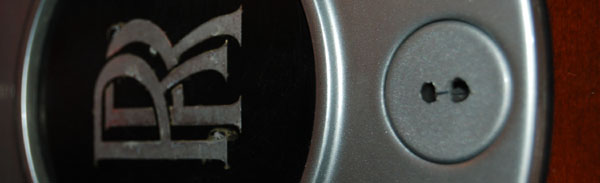
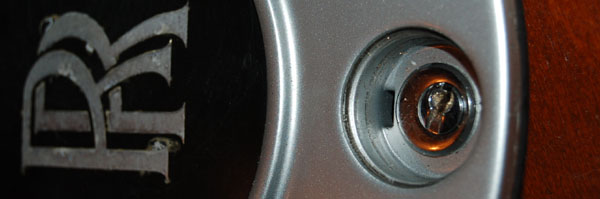
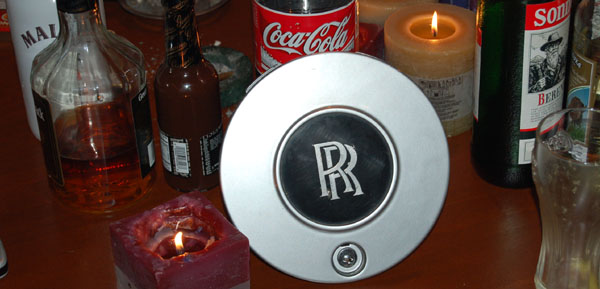
trying to pick the lock of a … wheelcap! It seems Rolls Royce
wheelcaps
are popular amongst collectors and thieves, and Rolls Royce
decided to put a semi-serious lock on them. And the owner of the Rolls
lost his keys, calling my poor friend to help.

Rolls Royce wheelcap

The locksmith found out the hard way it was not easy to pick. I even
had difficulties with it when the cap was on the table. The sad part
is he agreed a low price before picking the lock, since the owner was
not willing to spend any money on it. Typical behavior of rich people
(but that is another story).

rolls royce wheelcap

The poor locksmith never thought it would take him two hours to open
that silly little lock. When he opened it, he took it back to his
shop to make a key to open the other three wheelcaps. He will try
impressioning, and if that does not work he will disassemble the lock.

When my friend told the story I asked him to get the wheelcap from his
van to make some pictures for this weblog. At the time I thought it
was a great story. When I woke up the next morning (afternoon) I had
an headache and was less enthusiast about this ‘great story for the blog’.

hips

I hope you still find it an entertaining story and like the pictures….

Military grade padlocks and the ‘seven parts’ rule…

December 15th, 2006

I do not know if there is any truth to the story, but it is nice to
tell anyway. The story is that guns and rifles never have more then
seven ‘basic parts’. The reason for this is that soldiers will be
confused and make mistakes if the need to clean or repair the gun and
there are more then seven parts.

I hear you think, what does this have to do with locks?

7 parts

Well … besides guns the army also makes use of locks. Locks in
high-security environments. One of the requirements for these locks is
that the core can be replaced ‘in the field’. In case of a missing key,
or suspicion the key is compromised the core of the lock needs to be
replaced asap. Of course they could replace the entire lock, but at
the cost of US$ 1.200 each this is even over the top for the US army.
It is much cheaper to only change the core of the lock.

In order to have people change the core in the field, the locks are
constructed with the ‘maximum of seven parts’ rule in mind.

Han Fey has got some of these real high security padlocks in his
collection. The top model being the Sargent and Greenleaf 833. The
nice thing about this S&G 833 is that it is protected against a wide
range of attacks.

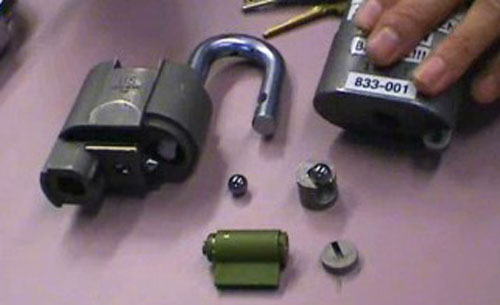
To secure it against manipulation the lock contains a six pin Medeco
Bi-Axial core. Good luck picking or manipulating that …

But what is real special are the ceramic inserts. These strategically
placed strips of hard ceramics prevent cutting and grinding. Last toool
evening by accident a ceramic expert was present. He looked at the
ceramic material and concluded is could probably not even be cut with
diamond drills or grinders. He was impressed by it. Pretty neat.

The S&G 833 is also the only padlock in the world (?) that will resist
an attack with liquid nitrogen. The idea behind this attack is to keep
a lock dipped in liquid nitrogen for 30 minutes, cooling the metal
close to -196 degree Celsius. All other metal objects will shatter if
that cold and hit with a hammer. But not this lock. Supposably the
metal alloy is designed to be secure against this. Unbelievable …

And last but not least all parts of (the military version of) this
lock have a serial number stamped into it. This is to prevent people
‘peeling’ the lock layer by layer until they reached the core. With
the naked core in front of you it is not too difficult to disassemble
it and see the size and rotation angle of the pins. Once an attacker
knows these parameters he makes a key for the lock, rebuilds the core
and inserts it in a fresh padlock. But with codes punched into
different parts of the lock this attack is not made easy.

And last but not least Han shows a military version of an Abloy padlock.

I hope you enjoy another exclusive blackback video on military grade padlocks (10 minutes, WMV 79 Mb)

New competition locks coming in …

December 14th, 2006

Tonight was another Toool night in Amsterdam. The last this year. We
already collected some locks that are very likely candidates to become
the official 2007 competition locks. But still locks are coming in by
mail, and on January 3 we will make the final selection. I shot some
video of the locks that came in so far for those interested. (WMV 25 Mb)
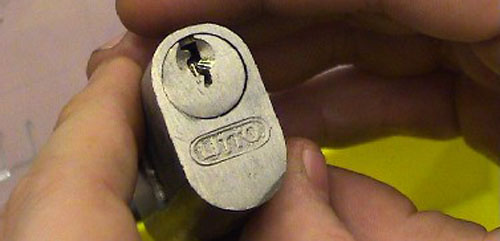
litto belgium

Django offered me something as well tonight. I have been thinking for a long time
if I should mention it on this blog or not. It was just too funny to let pass …

Kassa video clip online now …

December 9th, 2006

The clip is available online now. Paul did real well, and the ’safe
cracking clips’ turned out ok. At the end Paul was challenged to break
open a safe live on camera, with the clock ticking. Not my cup of tea…
But all in all not a bad item and my compliments to Paul.
The (long) clip can be downloaded here (99 Mb, WMV, 13 Minutes)

An overview of the safes that were tested can be found on the Kassa website.

Since I do not know how long the info will be available there, here is the list:
Protector Electronic Dial (€108), Home Safe (Praxis €59,95), Guard M80E (Karwei
€ 49), Dura Lock S23EL (Karwei € 49,95), Electronic Digital Safe (Kijkshop € 39,99)
and Dura Lock FS30MD (Gamma € 99).

Cracking safes on demand (Part 2)

December 9th, 2006

… Looking at this table and camera setup I talked with Paul Crouwel, the
safe technician I came with. The original idea was to do this little
test under the flag of Toool. Paul would say something about the safes
and the way they were constructed and I would talk about the quality
of the locks. But this camera setup, and the content of the safe
(monopoly money and a pearl necklaces) proved the TV makers still
wanted to shoot the test as if it was a real time burglary. This was
reason enough to let Paul Crouwel do the test on his own. A real pity,
I would have loved to pick these locks and say something about them…

safe test part 2

The results of the test can be seen today for those of you who can
receive Dutch television (NL 1 18:55). Besides testing the safes on
being burglary proof they were also tested to see how well they could
handle being dropped from great heights as well being set on fire.
(unfortunately not at the same time, that would have been real
spectacular television 😉

And for the record: Paul Crouwel normally never ever ever opens this
kind of low quality safes. He is a real specialist that mainly focuses
on high security safes. And he is one of the few people I know that on
a regular basis opens bank and post office safes. He invests a lot of
time and money in keeping up to date with safe technology and even
tries to open these high security safes without damaging them. For
this he uses a method known as ‘manipulation’, that was also covered
during the Sneek lectures. For this he constantly purchases the best
of the best materials and spends hours a day practising with it.

The latest tool in his toolbox is a manipulation aid from the UK.
Special hardware and software that will help determine what numbers
are in a safe combination, and what wheel you are working on. I shot
some video when the tool was demonstrated in Sneek (Video 17 Mb WMV).

To come back to the test: I can’t wait to see what they made of it.
Paul Crouwel will be live in the studio tonight and comment on the
test results. Needless to say I will make the video available asap on this site…